
When Should You Call a Doctor at Home Instead of Visiting a Hospital?
In today’s world, it’s not always necessary to visit a hospital for medical care. Thanks to home doctor visits, many people are opting for this convenient option for non-emergency medical needs. But how do you know when it’s best to call a doctor to your home, and when is it better to head to the hospital? Let’s break it down!
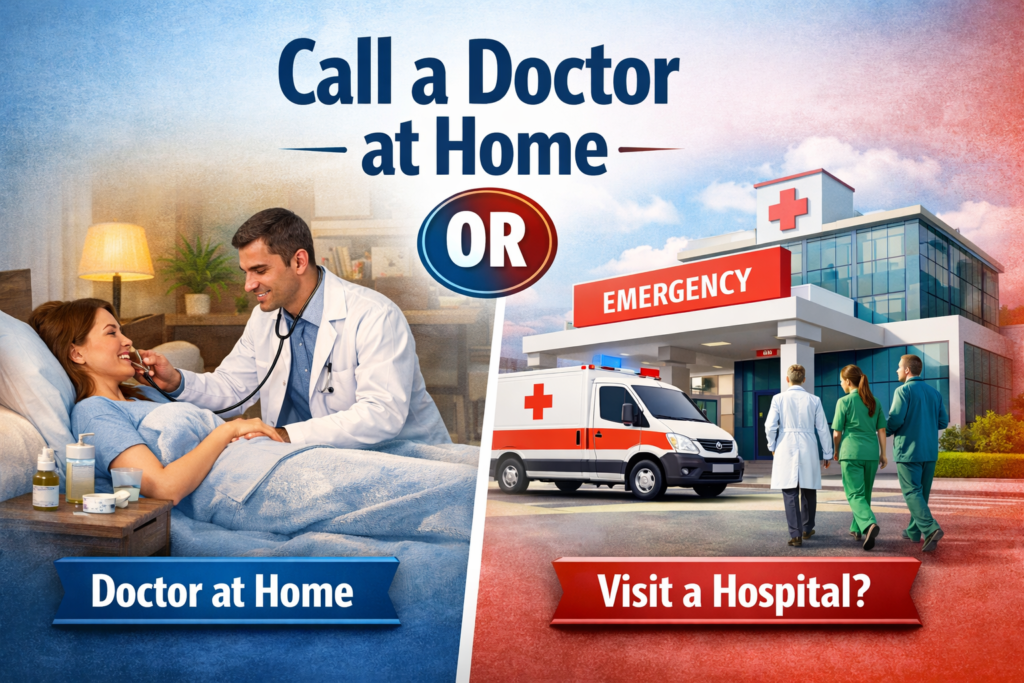
When Should You Call a Doctor to Your Home?
- Dealing with Mild Illnesses
If you’re feeling a bit under the weather with a mild cold, cough, or low-grade fever, a doctor can visit your home to diagnose and suggest treatments. Home visits allow you to avoid waiting in crowded clinics and get immediate care in the comfort of your home. - Managing Chronic Conditions
For ongoing health conditions like diabetes, hypertension, or asthma, regular doctor home visits are a great way to stay on track with your medication and management plan. A doctor can help monitor your health without the hassle of hospital visits. - Post-Surgery Recovery
Recovering from surgery can be challenging, and a doctor visiting your home can check on your healing process. Whether it’s dressing a wound or providing care advice, home visits make post-surgical care easier and more convenient. - Care for Children or Seniors
If you have children or elderly family members who require medical attention, a home doctor visit can be more comfortable and less stressful. A doctor can give personalized care and ensure your loved one is recovering well. - Treating Minor Injuries
Suffered a sprain, bruise, or minor cut? A home doctor visit can help you get treated quickly, saving you the trouble of going to the ER for something simple.
When Should You Head to the Hospital?
- Severe Pain or Injury
If you’re experiencing intense pain or have suffered a significant injury like a broken bone, severe burn, or head injury you need to go to the hospital. These conditions require immediate and specialized care. - Shortness of Breath or Chest Pain
If you’re feeling chest pain or struggling to breathe, these could be signs of a heart attack or other serious issues. Seek emergency care immediately. - Severe Allergic Reactions
If you’re having difficulty breathing, swelling of the throat, or a severe allergic reaction, this is a medical emergency that requires immediate hospital care. - Infections or Rashes
Certain infections, such as meningitis, or fever with a rash, could indicate serious conditions. You should head straight to the hospital for testing and treatment. - Unexplained Symptoms
Sometimes, you may experience symptoms that don’t seem right but aren’t immediately obvious. If you’re unsure about your health or feel something is wrong, it’s always safer to go to the hospital for a check-up.
Conclusion: The Right Choice for Your Health
Deciding whether to call a doctor to your home or visit the hospital can be tricky. But remember: home doctor visits are ideal for non-emergency cases, chronic condition management, and recovery from minor injuries. However, if you’re experiencing serious symptoms, don’t hesitate to go to the hospital.